Aureliano de Beruete y Moret
Spanish painter 1845-1912
Showing posts with label other artists. Show all posts
Sunday, July 27, 2014
Thursday, July 24, 2014
Seeing colours
I picked up the book "Hawthorne on painting" from the library. I have always wondered at the about how the colorists were able to see all the colours, and thought maybe the book would tell me how. Well I just finished it, and it doesn't say anything about it. It talks about seeing with your eyes on things as though it's the first time you are looking at it, and that it takes time to learn to see. It talks about carefully studying the relationship between one colour spot to another, and that if your colours are true, the likeness will come with it. The likeness Hawthorne talks about in the book is in a very broad sense. It includes the likeness of a person, the likeness of an object, and even the likeness of the time of day and the feelings, all attribute to the trueness of the colour spots and how they are next to each other. These are all very fascinating ideas, and allowed me to see things in a different way.
I also stumbled upon a few paintings with great use of colours.
Eric Merrell
Daniel Pinkham
Mark Kerckhoff
I also stumbled upon a few paintings with great use of colours.
Eric Merrell
Daniel Pinkham
Mark Kerckhoff
Sunday, July 06, 2014
Frank Duveneck 1848 - 1919
Frank Duveneck made equally impressive work in both portraiture/figure as well as landscape. His handling was bold, textural and explosive, and surprisingly contemporary looking even today! Here are a few of my favourites:
| Horizon at Gloucester - 1905 |
| Red Sail in the Harbor at Venice - 1884 |
| Rocky Coast Scene |
| Tuscan Hills - 1900 |
Thursday, June 12, 2014
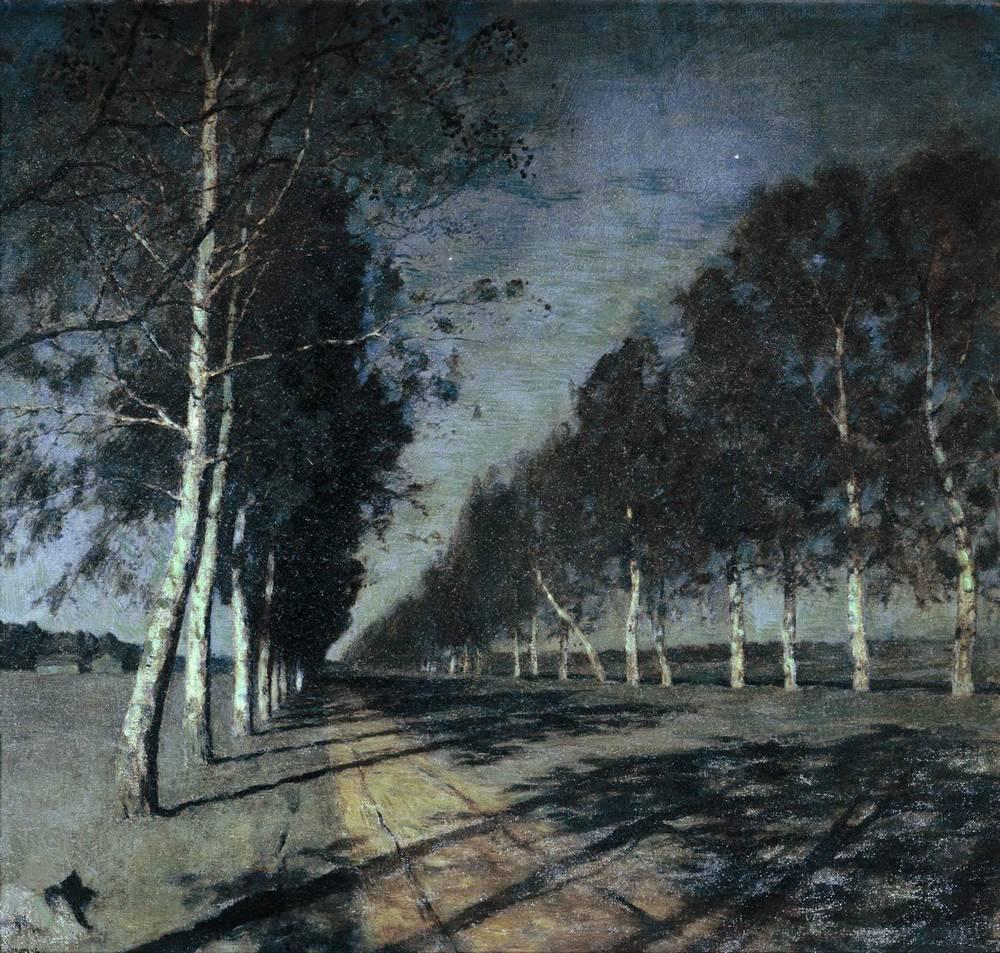
Isaac Levitan - Night for day?
"Day for night" is a common technique where the film makers shoot footage during the day, and process it to make it look like it's night time.
I have wonder how the painters without today's technology painted their nocturne paintings. From what I recall, Whistler would go out at night and made drawings and mental notes of his subject, and finish the final nocturne painting in the studio, likely during the day time hours. But he was a tonalist, who took great liberty in colours, so this approach seems very natural.
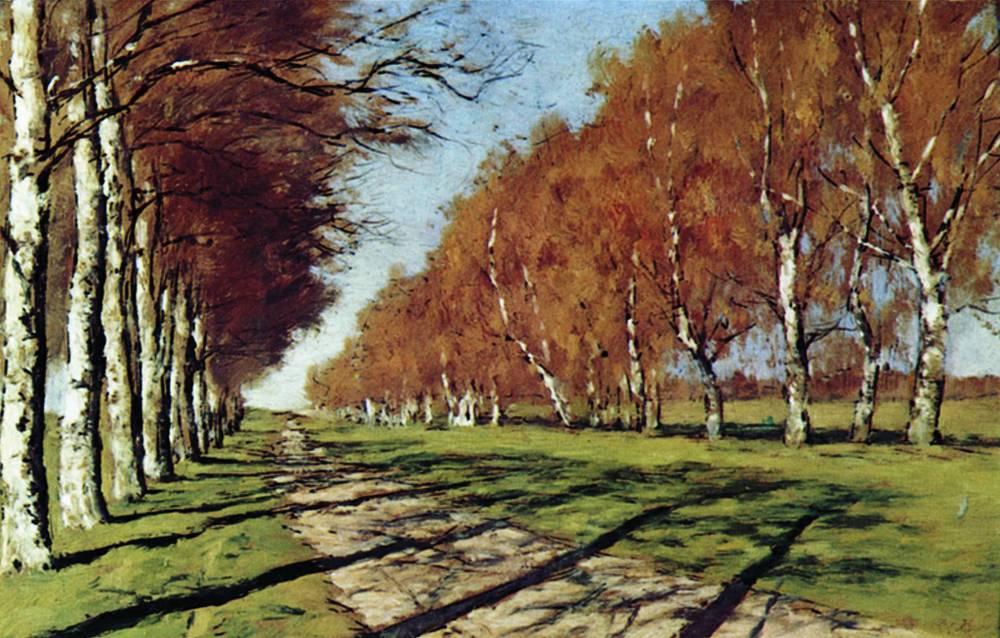
For someone like Levitan, I was less sure. He made 2 paintings of what seems to be the same road, and even the same trees, 9 years apart according to wiki art. If the dates are true then that's quite puzzling as he did the night painting FIRST!
Did he do the first painting on location, or did he made a drawing first and then completed the painting later like Whistler did? If he did it on location, what did he use to illuminate his canvas in the dark? Fire light/candles/oil lamp is unthinkable to me as that would drastically affect his colour perception because of the colour temperature.
For the second painting, 9 years later, did he revisit the spot? or did he paint it based on the first painting?
It would make a lot of sense to me if he did the sunny painting first, and then later turned it into the nocturne, as the other way around sounds quite unusual.
I have wonder how the painters without today's technology painted their nocturne paintings. From what I recall, Whistler would go out at night and made drawings and mental notes of his subject, and finish the final nocturne painting in the studio, likely during the day time hours. But he was a tonalist, who took great liberty in colours, so this approach seems very natural.
For someone like Levitan, I was less sure. He made 2 paintings of what seems to be the same road, and even the same trees, 9 years apart according to wiki art. If the dates are true then that's quite puzzling as he did the night painting FIRST!
| Moonlit Night: A Village - 1888 - Isaac Levitan |
| Big road. Sunny autumn day - 1897 - Isaac Levitan |
For the second painting, 9 years later, did he revisit the spot? or did he paint it based on the first painting?
It would make a lot of sense to me if he did the sunny painting first, and then later turned it into the nocturne, as the other way around sounds quite unusual.
Thursday, May 29, 2014
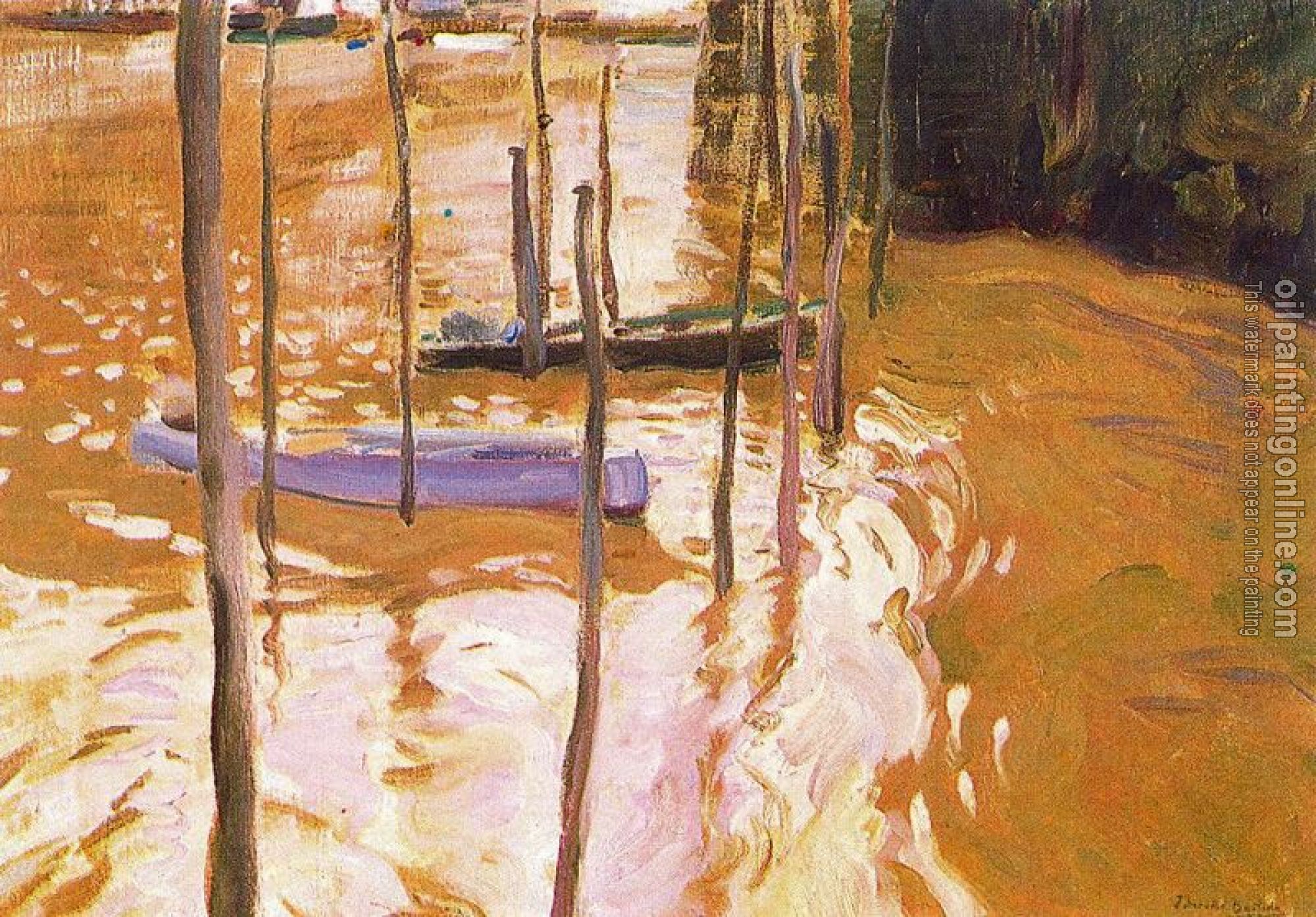
small sketches by Sorolla
| El Retiro, Madrid - Joaquin Sorolla y Bastida |
| Levantine landscape - Joaquin Sorolla y Bastida |
| Lady and Dog on the Beach, 1906 - Joaquin Sorolla y Bastida |
![]() |
| Paisaje marino del Monte Ulía - Joaquin Sorolla y Bastida |
| Painting On Biarritz Beach - Joaquin Sorolla y Bastida |
| - Joaquin Sorolla y Bastida |
| Washerwomen - Joaquin Sorolla y Bastida |
Thursday, May 08, 2014
Willem Bastiaan Tholen
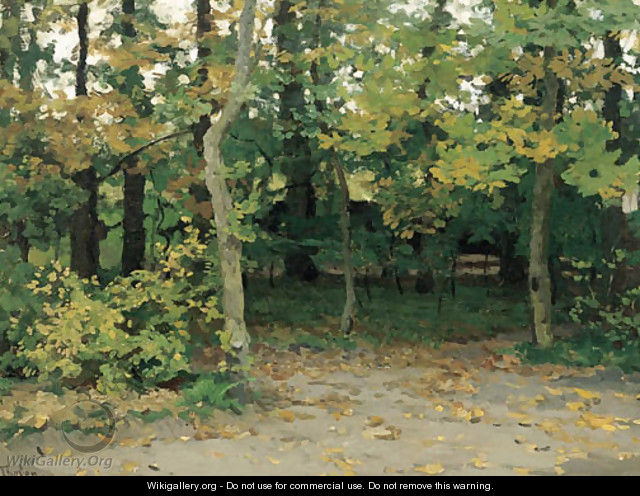
I have just learned about Willem Bastiaan Tholen (1860 - 1931) from Holland.
I am a sucker for naturalistic paintings. These paintings of his are special to me:
This is such a everyday encounter one would have at a near by park.
A painting of a back yard with dirt floor with a bold design.
I am a sucker for naturalistic paintings. These paintings of his are special to me:
This is such a everyday encounter one would have at a near by park.
| Willem Bastiaan Tholen |
A painting of a back yard with dirt floor with a bold design.
![]() |
| Willem Bastiaan Tholen |
A painting that required masterful restraint.
| Willem Bastiaan Tholen |
Friday, March 21, 2014
2 Australian paintes
I stumbled upon 2 Australian landscape painters and I would like to share their work with you.
Arthur Streeton 1867 – 1943
and Tom Roberts 1856 - 1931
One thing I like about their paintings is that they feel 'timeless'. Their work are not intentionally made to look 'classic' or 'modern', they just look like the artists depicted them based on what they saw, and not what their time and culture imposed on them and I like that. I may also feel this way because they were closer to my time, though I can't say the same for the Hudson River school paintings.
Both of their work seem to show some serious cracking, I wonder if it has to do with certain paint that they use such as Flake white?
Arthur Streeton 1867 – 1943
| Cremorne pastoral - Arthur Streeton |
| Still glides the stream, and shall for ever glide - Arthur Streeton |
and Tom Roberts 1856 - 1931
| A quiet day on Darebin Creek
- Tom Roberts |
One thing I like about their paintings is that they feel 'timeless'. Their work are not intentionally made to look 'classic' or 'modern', they just look like the artists depicted them based on what they saw, and not what their time and culture imposed on them and I like that. I may also feel this way because they were closer to my time, though I can't say the same for the Hudson River school paintings.
Both of their work seem to show some serious cracking, I wonder if it has to do with certain paint that they use such as Flake white?
Thursday, March 13, 2014
Spring Robins
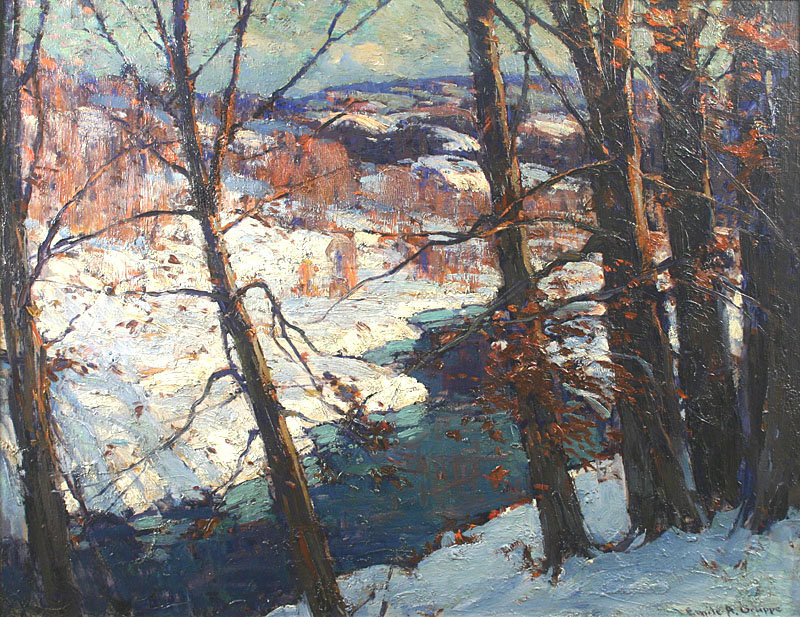
It was my first time at Barnett park and I am sure I will go back for more. Sometimes though being at a beautiful place doesn't mean it will actually be good painting subject. I chose to paint through the trees as many landscape artists have done, such as Emile Gruppe and Willard Metcalf.
It gets trickier to paint the scape behind the trees, because it's broken up by the large branches, and once you start to paint the branch and you want to modify the background it becomes problematic. The clouds were moving so that changed everything a lot, and whatever changed on the mountain would change the reflection too, but that also presented more options for me to pick and choose, and that's something that would not happen otherwise in the studio.
I used dark over light and light over dark on the trees so some of them would pop, and some I would let them disappear by giving them the same value as the background, thus create rhythm in them and give the painting life.
Have you found the robins in my painting yet?
![]() |
| Spring Robins - oil on panel - 9" x 12" |
It gets trickier to paint the scape behind the trees, because it's broken up by the large branches, and once you start to paint the branch and you want to modify the background it becomes problematic. The clouds were moving so that changed everything a lot, and whatever changed on the mountain would change the reflection too, but that also presented more options for me to pick and choose, and that's something that would not happen otherwise in the studio.
I used dark over light and light over dark on the trees so some of them would pop, and some I would let them disappear by giving them the same value as the background, thus create rhythm in them and give the painting life.
| Emile A. Gruppe |
| Emile A. Gruppe |
| Willard Leroy Metcalf |
![]() |
| Tom Thomson - He did a lot of these. I guess when you always paint by the lake you have to find some foreground elements. |
The Fallen
This was painted at the Burnaby mountain park. Again, it took a while to 'find' a good composition. Of course, a highly skilled painter would be able to find a mediocre view and create his unique design from elements that are surrounding him/her, like setting up a still life. For me, I need to find a design that's at least 80% to perfection. In this case, the woods was not nearly as dense, and the blue distant mountain was not visible in this angle. I did those changes for creating a better design.
I feel like I was with Ivan Shishkin sitting in the woods together. Shishkin was an amazing Russian landscape painter who painted many forest scenes in superb draftsmanship. He was able to render super complex views into a pleasing image. Some people may some that it's not as poetic with that level of details, but his skills were without a doubt and should be studied for someone like me.
I am starting to grow fond of trees. They have so much character and textures in them. The colours are so obvious I don't feel like I am inventing anything, just paint what I see and I get a brilliant gamut of color variation that is so satisfying.
![]() |
| The Fallen (Heather named this one) - oil on panel - 9" x 12" |
I feel like I was with Ivan Shishkin sitting in the woods together. Shishkin was an amazing Russian landscape painter who painted many forest scenes in superb draftsmanship. He was able to render super complex views into a pleasing image. Some people may some that it's not as poetic with that level of details, but his skills were without a doubt and should be studied for someone like me.
| Ivan Shishkin - Forest |
| Ivan Shishkin - Dark Forest - 1890 |
Subscribe to:
Posts (Atom)